
-
About CAE
-
Organization
-
Faculty
-
Degrees&Programs
-
Research
-
News & Events
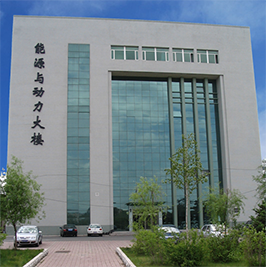
Department of Energy and Power Engineering
The Department of Energy and Power Engineering (formerly the Department of Internal Combustion Engines) at the College of Automotive Engineering, Jilin University, has a long and distinguished history. Established in 1955 alongside the birth of China's First Automobile Works, the department was formed through the integration of related programs from Jiaotong University, Huazhong Institute of Technology, and Shandong Institute of Technology, with the mission of cultivating high-level professionals in automotive engine engineering. Through nearly six decades of development, consolidation, and the unremitting efforts of successive generations, the department has forged a unique identity in both teaching and research, preserving its legacy while embracing innovation. Today, it stands as a premier talent cultivation base for China's automotive engine industry, an independent research and innovation hub for automotive energy and power, and a service center for automotive powertrain evaluation and industry-wide common technologies.
The Department began enrolling undergraduate students in 1956 and graduate students in 1961. It was among the first in China to be granted master's degree authorization in 1981 and doctoral degree authorization in 1983. In 2003, it established a postdoctoral research station in Power Engineering and Engineering Thermophysics, and in 2010, it was approved to offer a first-level doctoral program in the same discipline. The undergraduate program is offered under the major of "Energy and Power Engineering (Automotive Engine)," while master's and doctoral students are recruited under the first-level discipline of "Power Engineering and Engineering Thermophysics." Currently, the department enrolls approximately 110 undergraduate students, over 60 master's students, more than 10 doctoral students, and 2–3 postdoctoral researchers annually. To date, it has graduated over 6,000 undergraduates and more than 600 master's and doctoral students. Its graduates are highly sought after by employers, and among them are numerous distinguished leaders in China's automotive industry, including Li Jun, Zhao Fuquan, and Dong Chunbo.
Talent cultivation is the core mission of the department. Over years of accumulation, it has established a well-developed curriculum system. Undergraduate teaching is centered on core courses in engine construction, principles, design, and testing technology, supplemented by more than ten specialized courses, while graduate education is delivered through individualized training plans. Guided by theory-oriented teaching teams, supported by experimental teaching platforms, and focused on cultivating innovative talent, the department equips students with a solid theoretical foundation and rich practical capabilities. The "Thermal Energy and Power Engineering" program is now a distinguished specialty of Jilin Province, and the course "Internal Combustion Engine Design" is a provincial-level premium course. The department also hosts the "Jilin Provincial University Experimental Teaching Demonstration Center for Thermal Energy and Power Engineering," providing students with an excellent learning environment that integrates theory and practice.
Through investments under the national "211 Project" and "985 Project," the department's research facilities and capabilities have been significantly enhanced. It has achieved major research outcomes in multiple fields, including ultra-low emissions and low-carbon technologies for internal combustion engines, energy diversification and novel powertrain technologies, modern design theories and methods for internal combustion engines, fluid and transmission optimization control, combustion optimization and thermodynamic analysis, internal combustion engine product engineering, and biomass energy and energy-saving technologies. The department has completed over 100 research projects funded by the National Natural Science Foundation of China, the National Basic Research Program (973 Program), the National High-Tech Research and Development Program (863 Program), national key science and technology projects, provincial and ministerial programs, and collaborations with domestic and international enterprises. In recent years, it has published over 400 high-level research papers in prestigious academic journals and at major conferences, been granted over 30 patents, published 6 monographs and textbooks, and received 6 provincial or ministerial-level awards. The discipline of Power Engineering and Engineering Thermophysics is now a key first-level discipline in Jilin Province. In 2005, it was approved to establish the "Jilin Provincial Key Laboratory of Automotive Energy and Power," and in 2011, it was approved to establish the "Jilin Provincial Engineering Laboratory of Energy and Power."
The Department of Energy and Power Engineering boasts a well-structured and highly qualified faculty, currently comprising 44 staff members, including 11 professors, 6 associate professors, 8 lecturers, 1 research fellow, 6 senior engineers, 7 engineers, and 5 laboratory technicians. Additionally, 2 adjunct doctoral supervisors are appointed.
The department has signed cooperation and exchange agreements with the Japan National Traffic Safety and Environment Laboratory, the Korea Automotive Technology Institute, and the Pacific National University of Khabarovsk in Russia. It also maintains close ties with the University of Waterloo in Canada, the Massachusetts Institute of Technology, the University of Wisconsin-Madison, the University of Michigan, Hokkaido University, and Waseda University, among others.
Address: Nanling Campus, Jilin University, 5988 Renmin Street, Changchun, China
Telephone: 0431-85095271
Email: xiefx2011@jlu.edu.cn
Department Director: Xie Fangxi


Copyright 2022 College of Automotive Engineering, Jilin University. All rights reserved
Address: 5988 Renmin Dajie, Changchun E-mail:cae@jlu.edu.cn
 Official WeChat
 Official weibo